AI Skill for Real Estate Agents: Agent Newsroom
Most real estate agents do not have an idea problem. They have a production problem.
They know local content works. They know a useful neighborhood update can earn shares, start conversations, build an email list, and keep their name in front of future clients. They also know what happens on a normal Tuesday: a showing runs late, an inspection issue appears, a seller needs an answer, and the promised content calendar disappears behind the urgent work.
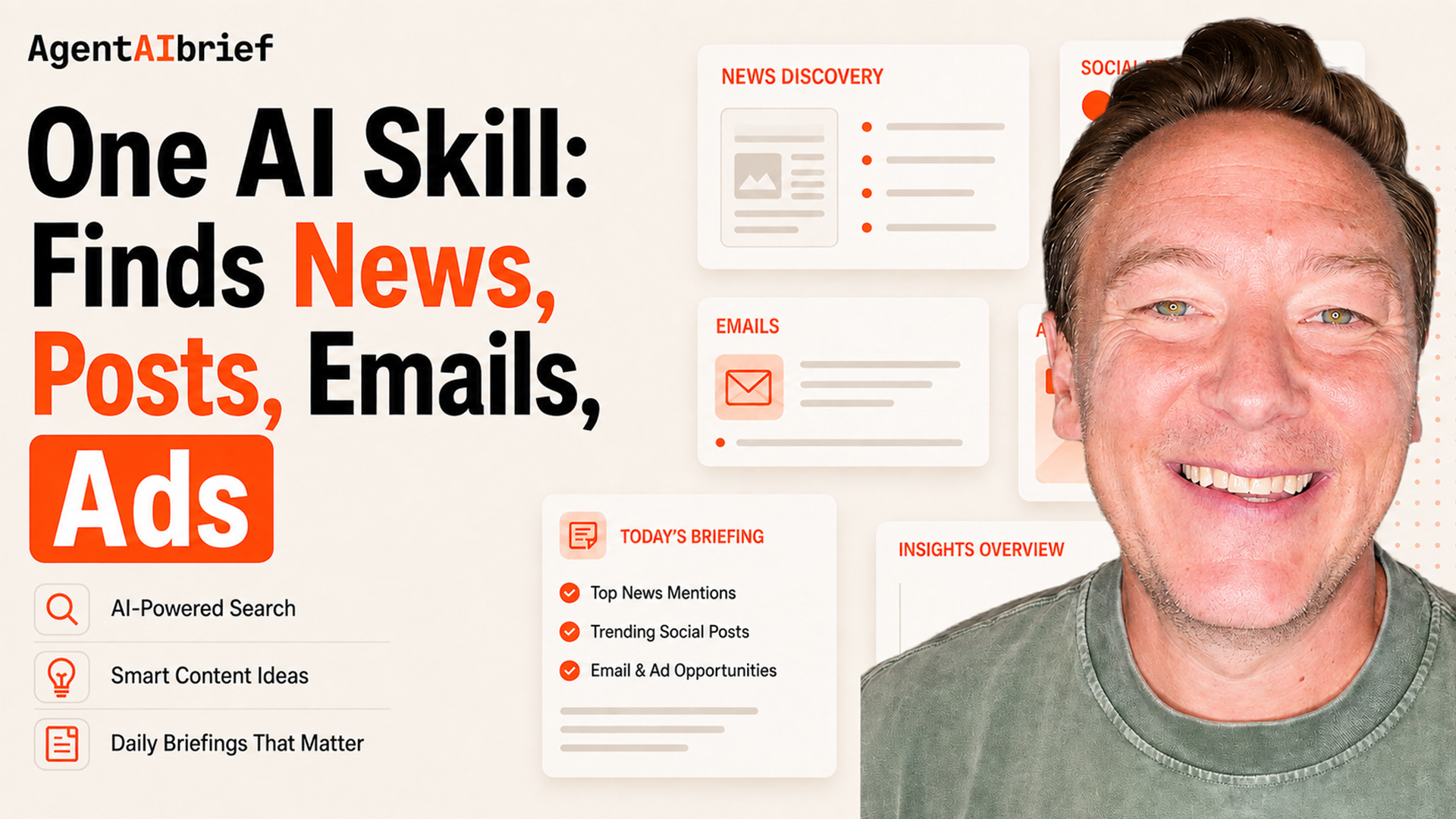
I built an AI skill for real estate agents to fix that production gap. It is called Agent Newsroom. The skill turns a scattered content routine into one defined system for researching local stories, ranking what matters, preparing Instagram carousels, reviewing weekly performance, drafting a Constant Contact newsletter, and preparing ads around proven posts.
The important word is system. This is not a magic prompt that publishes anything it finds. It is a reusable operating manual for ChatGPT and Codex. It tells the agent what to research, what to verify, what to save, when to stop, and where human approval is required.
That last part matters. You remain the editor.
Why Most Real Estate Content Systems Break
Agents usually try to solve content one post at a time. They open Instagram, stare at a blank screen, search for a headline, grab an image, write a caption, and hope the result is worth the hour it consumed. Then they repeat the same process the next day.
That is not a content strategy. It is a daily emergency.
The better model looks more like a local newsroom. A newsroom has beats to cover, a source list, a publishing rhythm, an editor, a performance review, and rules for corrections. It separates reporting from publishing. It also keeps a record of what ran so the team does not recycle the same story three days later.
Agent Newsroom brings that structure into an AI workflow. During onboarding, it asks for the market, jurisdictions, timezone, excluded subjects, brand assets, publishing schedule, Instagram identity, newsletter preferences, and approval rules. Those answers become a client profile that governs future runs.
The default workflow targets 20 eligible local stories per day. It scores them, recommends three, prepares approved carousels, and maintains a weekly loop that turns the best-performing stories into a newsletter and optional paid promotion.
You can change those defaults. A rural agent might cover several counties and publish twice a week. A team in a dense metro might cover five jurisdictions and publish three times a day. The point is not the exact number. The point is having one explicit operating system instead of rebuilding the process from memory every morning.
Download Agent Newsroom
The package is intentionally small. It does not contain an app, a hidden executable, or a pile of generated filler. It is a structured set of instructions that teaches the agent how to operate the workflow reliably.
OpenAI describes skills as reusable workflows made from a required #f5f0ea] px-1.5 py-0.5 rounded text-sm break-all whitespace-normal">SKILL.md file plus optional references, scripts, assets, and interface metadata. Standalone skills are available in the ChatGPT desktop app, Codex CLI, and the IDE extension. In ChatGPT you can invoke a skill with @. In Codex you can select it with $ or /skills. [Availability can vary by plan, platform, region, rollout, and workspace settings.
What Agent Newsroom Actually Does
The skill covers five connected jobs. Each one can run separately, but they become more valuable when they share the same client profile, story IDs, approval history, and performance data.
1. Researches and ranks local stories
The daily research workflow begins with the agent's configured counties, cities, or other local jurisdictions. It looks for fresh developments across government sources, planning records, school-board materials, official business announcements, local publications, and public discussion signals.
Public discussion can reveal demand, but it is not treated as proof. If a Reddit thread says a restaurant is closing, the workflow still looks for a statement from the business, property owner, government filing, or another credible source before presenting the closure as fact.
The skill also forces the agent to distinguish among stages that are constantly mangled in local content: proposed, filed, scheduled for a hearing, approved, under construction, and open. A rezoning application is not an approval. An approval is not a groundbreaking. A press release is not proof that the doors are open.
Each eligible story receives a 0 to 100 viral-potential score. The rubric considers recency, local recognition, scale, novelty, usefulness, emotional energy, visual potential, and shareability. The score is an editorial forecast, not a fact. Every factor requires a short rationale so the number can be challenged.
The standard daily target is 20 stories. The default category mix is eight development or zoning stories, ten restaurant or business stories, and two government or school stories. Weak stories do not get padded into the report just to reach 20. If only 14 items pass the geography, freshness, sourcing, and duplicate checks, the report should contain 14 and explain the shortfall.
2. Recommends the best three stories
The top three recommendation is not simply a mechanical copy of ranks one through three. The workflow also considers geographic diversity, category variety, source confidence, and whether the stories can be illustrated with media the client has the right to use.
That means a slightly lower-scoring restaurant opening in Loudoun could make a better third recommendation than another Fairfax development story if the first two recommendations already cover Fairfax land-use news. The agent must explain the deviation.
This is where the human editor enters the loop. Manual approval is the default. The agent can recommend three stories, but a recommendation is not permission to publish. A team can later enable a tightly defined standing selection rule, but sensitive stories, missing image rights, conflicting facts, and account-security prompts still force a stop.
3. Builds approved Instagram carousels
For each approved story, Agent Newsroom prepares a six-slide, 1080 by 1350 portrait carousel.
The structure is consistent:
- A clear local hook.
- What happened.
- The key facts.
- Why locals care.
- What happens next.
- A conversation prompt and brand call to action.
That structure solves a common problem with real estate content. Too many posts begin with the agent instead of the news. The skill keeps the story first. The real estate call to action arrives after the reader understands the local development.
The workflow also prepares the caption, alt text, source list, and a rights manifest for every visual asset. A visible image in Google Images is not automatically licensed for a branded commercial post. Agent Newsroom prefers client-owned media, official media with clear permission, public-domain or properly licensed assets, rights-safe maps and graphics, or generated editorial illustrations that do not misrepresent a real event.
The default publishing rhythm is noon, 4:00 p.m., and 7:00 p.m. local time, with at least three hours between posts. Those are defaults, not universal best times. The onboarding process asks for the client's actual schedule and timezone.
If approval arrives after a slot has passed, the system does not cram three posts into the evening. It proposes the next eligible slot or the next day.
4. Turns the week's winners into a newsletter
Every Thursday, the weekly workflow reviews posts from the configured reporting window and ranks up to six winners.
It uses the verified organic performance metric for the exact Instagram account and date range. If Instagram exposes organic views, the workflow uses organic views. If the account only exposes a blended metric, the agent must label it and stop the organic-only ranking unless the client approves a substitute such as organic reach.
Likes are not quietly relabeled as views. A thumbnail counter is not treated as verified performance. Paid-supported posts are not presented as clean organic winners if the paid effect cannot be separated.
Those safeguards matter because the newsletter is built from the winning stories. The number-one story drives the subject line. The number-two story informs the preheader. The body follows a story and real estate sandwich: local stories, a relevant real estate module, more stories, and a final service call to action.
The result is a Constant Contact draft, not an automatic send. The workflow checks the audience, sender identity, legal address, unsubscribe footer, links, image rights, and mobile layout. A test send and final send still require the configured authority.
This is the part of the system I like most. The audience helps choose the newsletter. Instead of guessing which six stories belong in the weekly email, you use the local stories that already earned attention.
5. Prepares optional ads around proven posts
The skill also includes a paid-amplification workflow. It can select up to three eligible posts from the weekly winners and prepare Instagram profile-visit campaigns.
Again, prepare is the key word. The skill does not infer a budget or click Publish because last week's amount happened to be $100. It verifies the selected posts, account, objective, budget basis, duration, caps, targeting, placements, and approval scope for the current run.
Real estate creates an extra compliance issue. A local-news post can still become a housing-related ad based on the creative, destination, or surrounding campaign. The workflow tells the agent to classify every promoted post under current Meta rules and apply Special Ad Category restrictions when required. It does not try to dodge housing-ad rules by calling the campaign “local news.”
The package includes a $100 per post for three days example, totaling $300 for three posts. That is an onboarding example only. It is not permission to spend money.
How to Install the Skill
The easiest route is the ChatGPT desktop app.
- Download the ZIP above.
- Extract it. The folder you need is named
agent-newsroom. - Open the Skills area in the ChatGPT desktop app and add the extracted skill using the interface available to your account.
- Start a ChatGPT Work project for the newsroom.
AgentNewsroomis a clean project name. - Invoke
@agent-newsroomand ask it to begin onboarding. - Review the client profile it creates before enabling any recurring work.
If you use Codex locally, OpenAI documents user-level skills under $HOME/.agents/skills and repository-level skills under .agents/skills inside the working tree. Place the extracted agent-newsroom folder in the scope that matches how widely you want to use it. Then invoke $agent-newsroom or select it through /skills.
The original setup recommends GPT-5.6 Sol with high reasoning for a quality-first workflow. GPT-5.6 Sol is an official OpenAI reasoning model and supports high reasoning effort. It is a sensible choice for multi-step research and verification when it is available on your plan. The workflow can still be used with another capable model. The process and guardrails matter more than blindly copying one model setting.
The Onboarding Questions You Should Answer Carefully
Do not rush onboarding. A vague profile produces vague research and risky publishing.
The skill asks for:
- The client or team name.
- The exact counties, cities, districts, or neighborhoods to cover.
- The daily lookback window.
- Excluded topics, sources, competitors, and words.
- The local timezone and delivery deadline.
- Publishing days and times.
- The Instagram account and associated Meta identities.
- Brand files, fonts, colors, voice, and calls to action.
- Required brokerage, accessibility, advertising, and Fair Housing disclosures.
- Constant Contact audience, sender identity, legal address, and final approver.
- Whether paid amplification is enabled.
- Where reports, creative files, profiles, and run logs should be stored.
For real estate, the content rule should be simple: describe properties, places, projects, services, and public facts. Do not target protected classes or describe who should live in a neighborhood. A strong local-news strategy does not need phrases like “perfect for families” or “ideal for young professionals.” It wins by being useful and specific.
The client profile should not store passwords, security codes, session cookies, access tokens, or payment-card data. Those belong in the connected service or the host's secure credential system.
What the Skill Will Not Do by Itself
This is where the marketing claim needs a reality check.
Installing the ZIP does not automatically create seven scheduled tasks. It does not authenticate Gmail, Instagram, Meta Business Suite, Meta Ads Manager, or Constant Contact. It does not grant publishing permission. It does not know which account belongs to the client. It does not provide image licenses. It does not create an ad budget.
It gives the agent a precise method for setting up and operating those workflows once the required tools, accounts, permissions, and approvals exist.
That distinction is not a weakness. It is what makes the system safer. An AI workflow that can send email, publish social posts, or spend money should not assume authority from a ZIP file.
The first installation should end with a production dry run:
- One validated sample research workbook.
- One unsent email draft.
- One unpublished carousel.
- One Constant Contact draft.
- One unpublished Meta ad draft if paid amplification is enabled.
Only after those outputs are reviewed should the user approve schedules or live actions.
The Safety Features That Make This Useful
Most content prompts focus entirely on output. Agent Newsroom spends just as much attention on failure states.
It creates stable story IDs so changing a headline does not fool the system into treating the same story as new. It uses a short duplicate cooldown and a longer memory window for unchanged stories. A material new vote, opening, filing, approval, or construction milestone can become an update linked to the original story. Recycled coverage does not become new merely because three days passed.
Before each external action, the workflow creates a deterministic idempotency key. In plain language, it assigns a unique identity to the planned email, Instagram post, newsletter, or ad. If that action is already reserved, completed, or uncertain, the system stops instead of trying again.
That protects against one of the ugliest automation failures: the first click succeeds, the interface responds slowly, and the agent clicks again. In a social workflow that creates a duplicate post. In an email workflow it creates a second send. In an ad workflow it can create duplicate spend.
The skill also treats an uncertain result as uncertain. It does not convert “I cannot tell whether this published” into “published successfully.” It records the state, reports the blocker, and waits for verification.
How I Would Use Agent Newsroom in a Real Estate Business
I would start smaller than the full seven-task schedule.
Week one should be research only. Configure the market, run the daily scan, inspect the sources, and challenge the scoring. Look for predictable misses. Is the geography too broad? Are restaurant stories overwhelming development news? Are government sources producing stale agendas? Are duplicates slipping through because project names vary?
Week two should add carousel drafts without publishing. Review the hooks, factual status, visual rights, alt text, and local relevance. Make sure the brand call to action supports the story instead of hijacking it.
Week three can add approved publishing slots. Keep manual selection and creative approval active. Watch for timezone errors, wrong-account risks, and late approvals.
Week four can add the Thursday performance review and Constant Contact draft. Confirm that the metric is genuinely organic and that every newsletter link works on mobile.
Paid amplification should come last. Organic winners provide a better starting point than random boosted posts, but performance does not remove the need for ad-policy review, rights clearance, budget approval, and campaign verification.
This staged rollout is slower than clicking “automate everything.” It is also far more likely to produce a system you will trust three months from now.
The Real Advantage Is Not More Content
The biggest benefit is not that AI can draft another caption.
The advantage is continuity. Monday's research connects to Tuesday's production. Daily posts connect to Thursday's performance report. The performance report connects to the newsletter. Proven stories connect to optional paid distribution. Every stage refers back to the same client profile, source record, story identity, approval state, and run log.
That is how an agent stops being the entire content machine and becomes the editor of one.
I have used local content to grow from roughly 1,500 Instagram followers to about 35,000 in one year. That is my result, not a promise that the same ZIP produces the same audience for everyone. The skill cannot create local trust without good judgment. It can remove a huge amount of repeated research, formatting, tracking, and production work that keeps agents from being consistent.
If local attention matters to your business, download Agent Newsroom, run the onboarding carefully, and start with a dry run. Do not ask the AI to replace your judgment. Give it a newsroom to operate, then stay in the editor's chair.
Quick Start Checklist
- Download and extract the Agent Newsroom ZIP.
- Add the
agent-newsroomfolder to ChatGPT desktop or a supported Codex skills location. - Create a dedicated project.
- Invoke the skill and complete onboarding.
- Verify jurisdictions, timezone, accounts, brand, exclusions, and approvals.
- Run research-only for the first week.
- Review sources and scoring before approving stories.
- Clear visual rights before creating branded posts.
- Keep social, newsletter, and ad actions in draft mode until each workflow passes QA.
- Add recurring tasks only after you approve the exact schedule.
- Review performance with a verified metric.
- Never let an uncertain publish, send, or ad state trigger an automatic retry.
Download: Agent Newsroom Skill Package
For more practical AI workflows built for real estate, follow AgentAIBrief on Instagram.