Your Direct Mail Is Going In The Trash
Player not loading? Watch this video directly on YouTube.
Most real estate postcards are dead on arrival.
Not because direct mail is dead.
Because the postcard looks exactly like every other postcard in the pile.
High gloss exterior photo. Agent headshot. Generic headline. Open house box. Maybe a QR code. Maybe a "just listed" badge.
The problem is not the channel. The problem is the creative.
Neighbors are used to seeing the same postcard format over and over. If the mailer looks like standard real estate inventory marketing, it gets sorted fast, skimmed for half a second, and tossed.
The opportunity is to make the postcard feel like an actual piece of advertising again.
That is where AI is useful.
Not as a shortcut for lazy copy.
As a way to take proven advertising structure, combine it with real listing details, and turn it into a repeatable template your team can actually deploy.
This is the exact workflow we are using:
- Find a strong vintage print ad.
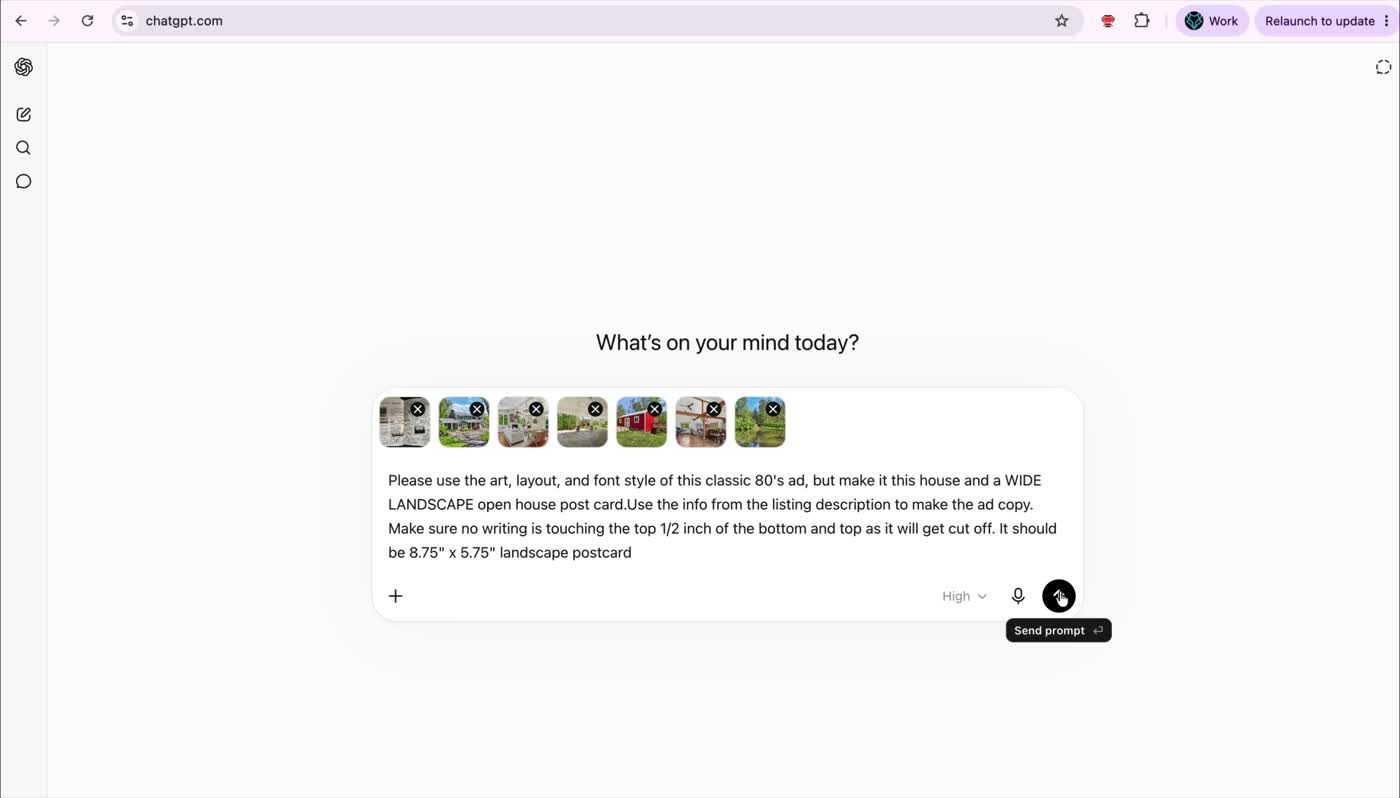
- Feed that ad, listing photos, and the listing description into ChatGPT.
- Ask ChatGPT to adapt the layout and copy style into a postcard.
- Turn the output into a Canva template.
- Send four mailers over a 21-day listing window.
The point is not to make something weird for the sake of being weird.
The point is to stop making postcards that look invisible.
Why most real estate postcards get ignored
Most postcards are built from the inside out.
The agent thinks:
- I need my logo.
- I need my headshot.
- I need the address.
- I need the open house time.
- I need a QR code.
- I need a call to action.
That produces a mailer full of correct information.
It does not necessarily produce a mailer anyone wants to read.
Real advertising starts with the reader's attention.
What would make someone pause at the kitchen counter?
What would make a neighbor flip the card over?
What would make them bring it to the open house instead of dropping it in the trash?
That is the standard direct mail has to meet.
For real estate agents, the bar is even higher because the neighborhood already gets a ton of property marketing. If the creative looks like a template, the audience reads it like a template.
The AI advantage is that you can use real advertising references as structure.
Instead of asking ChatGPT to "make a postcard," you ask it to study the layout, pacing, headline rhythm, and copy logic of a print ad that already worked.
Then you make it apply that structure to a real listing.
Step one: start with inspiration that has a reason to exist
The first step is not opening Canva.
The first step is finding a print ad worth borrowing from.
Vintage ads are useful because many of them had to earn attention without animation, video, retargeting, or algorithmic help. The ad had to make someone stop, read, and remember.
That is the same job a postcard has.
You are not copying the old ad directly. You are borrowing the logic:
- How the headline creates curiosity.
- How the image anchors the idea.
- How the body copy earns the next sentence.
- How the layout gives the reader a path.
- How the offer feels specific instead of generic.
In the supplied workflow video, the reference is a classic 1980s print ad style. The goal was not to make the listing look old. The goal was to use the visual discipline of that era: strong headline, structured body copy, clear hierarchy, and a reason to keep reading.
That distinction matters.
AI is much better when you give it taste.
"Make me a postcard" is vague.
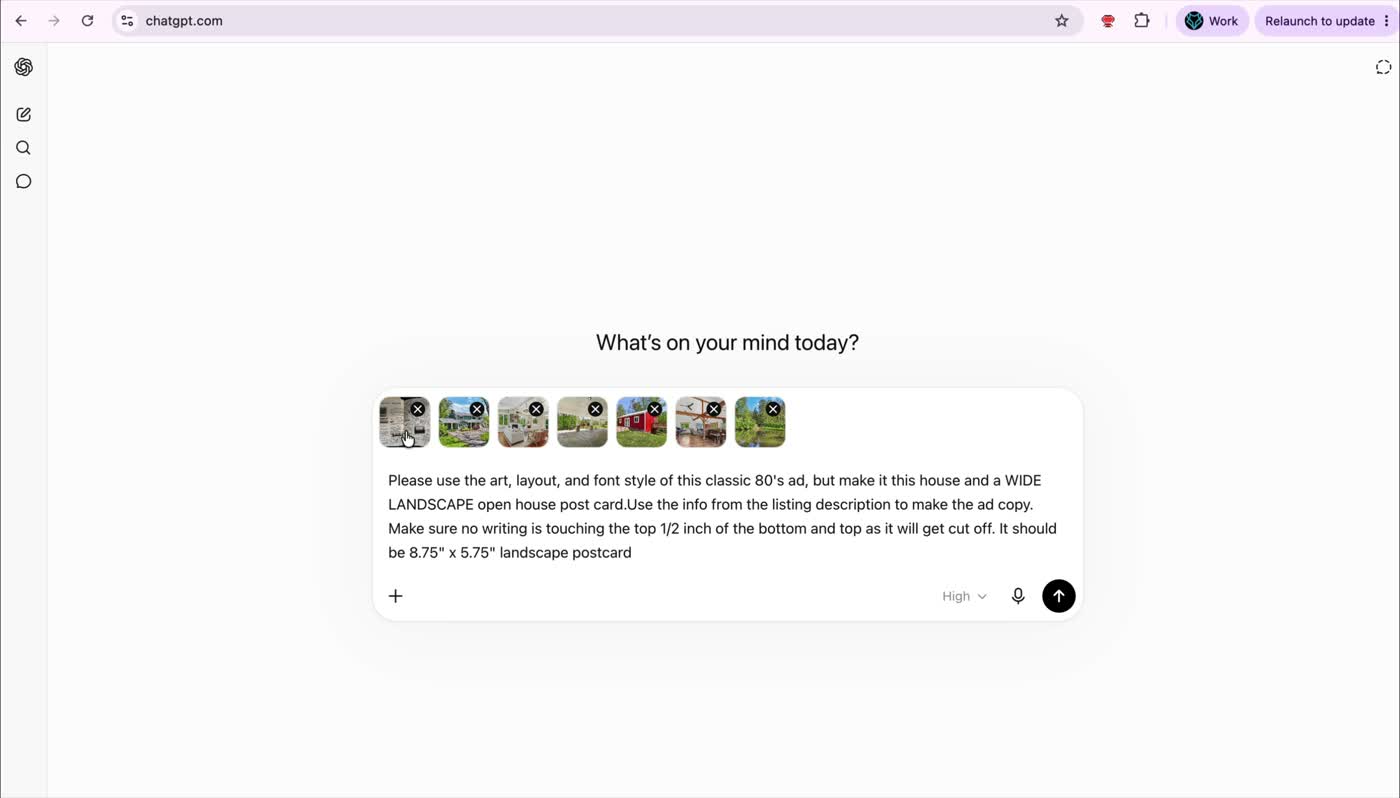
"Use the art, layout, and font style of this classic 1980s ad, then adapt it for this listing and postcard format" is a real creative direction.
Step two: feed ChatGPT real inputs
The next step is giving ChatGPT the raw material.
For this workflow, that means:
- A screenshot or photo of the reference ad.
- Exterior listing photos.
- Interior listing photos.
- The listing description.
- The postcard dimensions.
- Any printing constraints.
- The desired postcard purpose.
The prompt in the video tells ChatGPT to make a wide landscape open house postcard and to keep text away from the top and bottom cutoff zones.
That is important.
A lot of AI design workflows fail because the prompt only describes the vibe. Print work needs constraints.
The AI needs to know:
- Is this vertical or landscape?
- What size is the postcard?
- Is there a safe zone?
- Is this for coming soon, just listed, open house, or geo-farm?
- Does the front need a QR code?
- Should the copy sell the property, the open house, or the agent's marketing system?
The more operational the prompt gets, the more usable the output becomes.
This is also where real listing photos matter.
If you only give AI a property description, the output will usually feel generic. If you give it the actual visuals, the concept can respond to the property.
The goal is not perfect finished print design from the first prompt.
The goal is a strong first creative draft that a human can refine.
Step three: make the postcard carry an actual idea
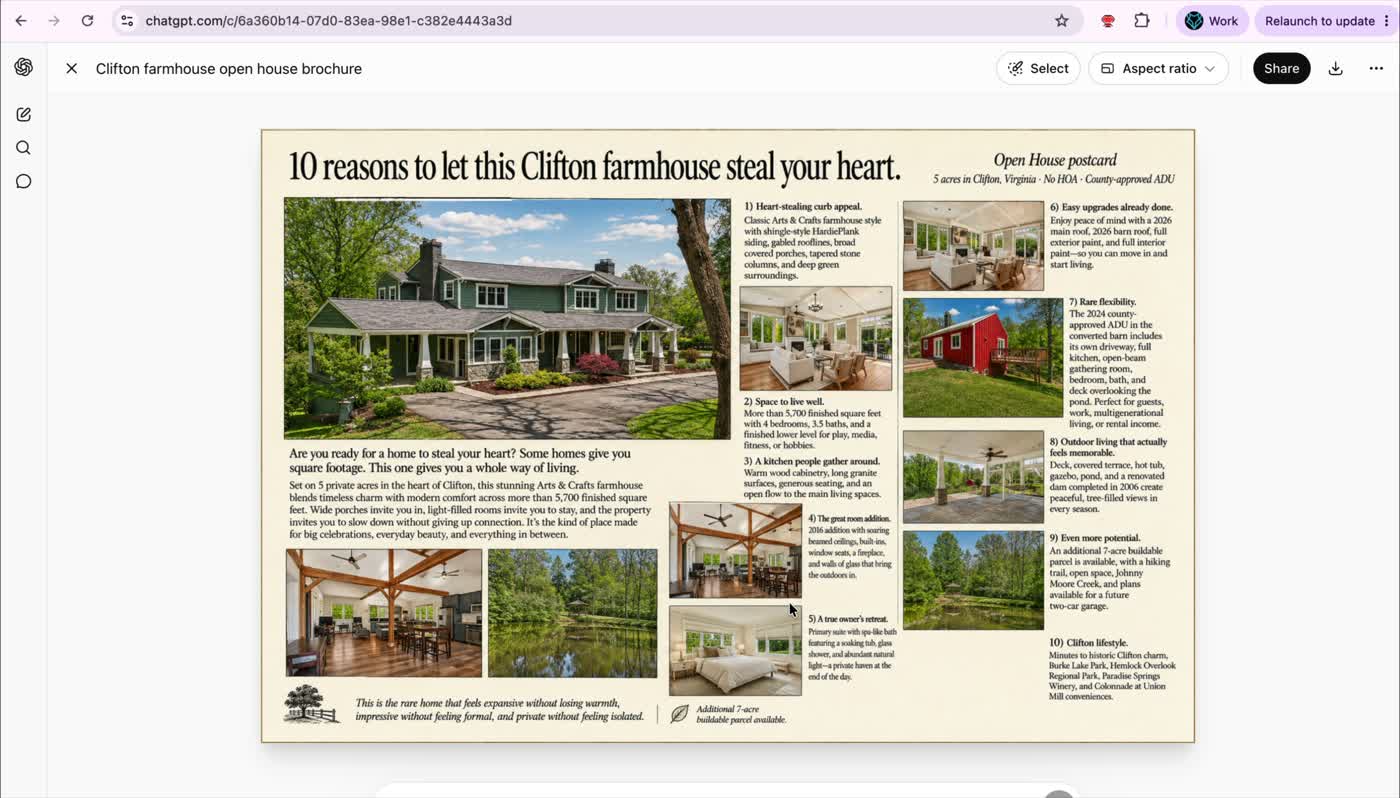
The generated postcard in the workflow did something most listing postcards do not do:
It gave the home an idea.
The headline was:
10 reasons to let this Clifton farmhouse steal your heart.
That is stronger than:
Just Listed in Clifton
The basic facts still matter, but the idea creates a reason to read.
Instead of dumping features into a bullet list, the postcard turns the home into a story:
- The curb appeal.
- The acreage.
- The kitchen.
- The addition.
- The retreat feel.
- The flexibility.
- The outdoor living.
- The future potential.
- The lifestyle around Clifton.
That is what good direct mail does.
It organizes information into a memorable angle.
For agents, this is the move:
Do not ask AI to write random marketing copy.
Ask it to create a concept.
The concept is what makes the postcard worth saving, talking about, or bringing to the open house.
Step four: move the winning version into Canva
ChatGPT is not the final production system.
Canva is.
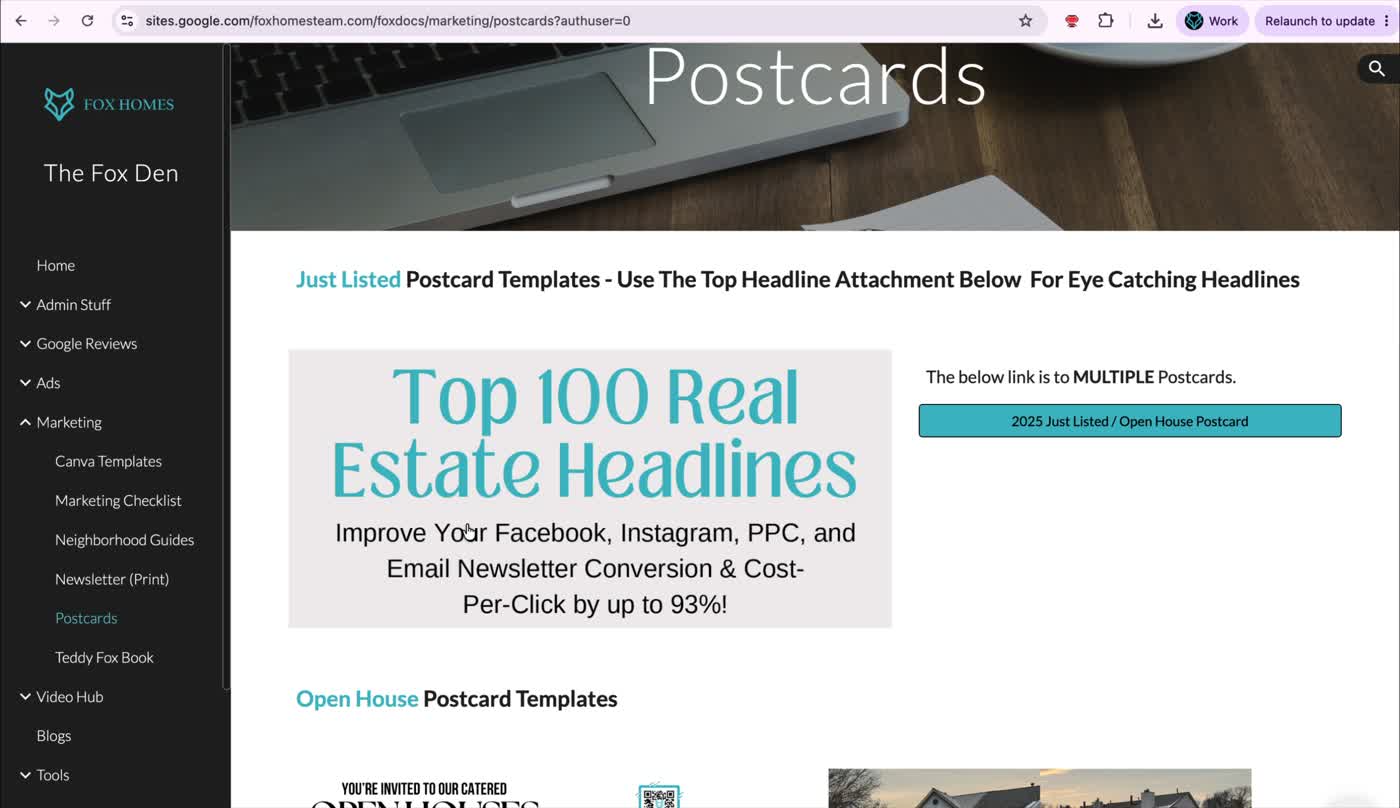
Once the AI gives you a strong direction, the job is to turn it into a reusable Canva template.
That gives the team a real workflow:
- Use AI for creative direction and copy structure.
- Use Canva for production, brand control, export, and reuse.
- Swap photos, addresses, open house times, and listing details for each property.
- Keep the template library organized so agents do not start from scratch.
This is where the workflow becomes a system instead of a one-off trick.
The key is to separate creative generation from operational deployment.
AI helps you get to a better idea faster.
Canva helps you make that idea usable by the team.
If you skip the template step, you get a cool experiment.
If you build the template library, you get a repeatable marketing asset.
Step five: send a sequence, not one lonely postcard
One postcard is easy to ignore.
A sequence is harder to miss.
The workflow in the script uses four mailers over 21 days:
- Coming soon.
- Friday open house.
- Saturday open house.
- Sunday open house.
That sequence matters because direct mail works through repetition and timing.
The coming-soon card creates awareness before the listing hits peak activity.
The open-house cards create repeated reasons to act.
The spacing gives neighbors multiple chances to notice the property, talk about it, or walk into the open house.
The best part is that the creative system can vary without starting over.
You can keep the same core concept and adjust the message:
- Tease the listing before launch.
- Invite people to the first open house.
- Add urgency for the weekend schedule.
- Recap what makes the property memorable.
That is how a single AI concept turns into a campaign.
The real reason this works
This workflow works because it respects both sides of marketing.
AI gives speed and variation.
Human strategy gives taste, timing, and quality control.
That combination is the point.
If you just ask AI for "a postcard," you will get average creative faster.
That is not enough.
The better workflow is:
- Start with proven creative inspiration.
- Use actual listing assets.
- Give exact production constraints.
- Ask for a strong concept, not just copy.
- Convert the best version into a branded template.
- Deploy it as a sequence.
- Watch whether the mailer creates real open-house conversations.
The output should not feel like an AI artifact.
It should feel like an ad that belongs in the mailbox.
The prompt structure
Here is the basic prompt pattern:
Use the art direction, layout logic, headline style, and copy structure of this reference ad. Adapt it for the listing photos and property description attached. Create a wide landscape real estate postcard for a coming soon or open house campaign. Keep important text inside the safe area. Make the headline specific, curiosity-driven, and readable. Use the listing's real features, but do not make unsupported claims. Give me a polished first draft that can be rebuilt in Canva.
Then add the operational details:
- Postcard size.
- Campaign type.
- Print safety zones.
- Brand colors.
- Required logo usage.
- Required call to action.
- Open house dates.
- QR code destination.
- Any compliance boundaries.
The more specific the inputs, the less cleanup you need later.
What to watch out for
This workflow still needs judgment.
Do not blindly print the first AI output.
Check for:
- Fake property details.
- Garbled small text.
- Wrong room counts.
- Incorrect acreage.
- Unsupported claims.
- Weak hierarchy.
- Hard-to-read copy.
- Brand drift.
- Print cutoff issues.
- Fair Housing language problems.
For listing marketing, the AI should only use facts you supplied or verified.
It should describe property features, not target protected classes of people.
That means the postcard can talk about acreage, porch design, kitchen layout, outdoor areas, parking, storage, renovation details, and open house timing.
It should not say who the home is "perfect for."
That one rule keeps a lot of marketing cleaner.
Why agents should care
The agents who win with AI are not the ones asking it for captions.
They are the ones turning AI into repeatable marketing systems.
This postcard workflow is a good example because it touches the whole chain:
- Creative research.
- Prompting.
- Listing asset reuse.
- Copywriting.
- Design direction.
- Canva production.
- Team template library.
- Direct mail cadence.
- Open house traffic.
That is real leverage.
Not because AI replaces the agent.
Because AI makes the agent's best marketing ideas easier to repeat.
If your direct mail looks like everyone else's, the problem is not the post office.
The problem is the creative.
Use AI to make the creative worth noticing.
Then turn the best version into a system your team can actually use.
Want the full setup behind workflows like this? Subscribe to AgentAIBrief and follow @AgentAIBrief on Instagram for daily AI workflows.