GPT-5.6 as a Real Estate AI Operator

Quick Summary
- GPT-5.6 remains a limited API and Codex preview for selected organizations and workspaces. It is not broadly available in ChatGPT.
- A paid ChatGPT plan alone does not grant access. The $200 figure discussed here is Dustin Fox's current subscription cost, not a preview access price or guarantee.
- The useful shift is from asking a chatbot for advice to giving an operator a bounded job, approved tools, clear stop conditions, and a required proof trail.
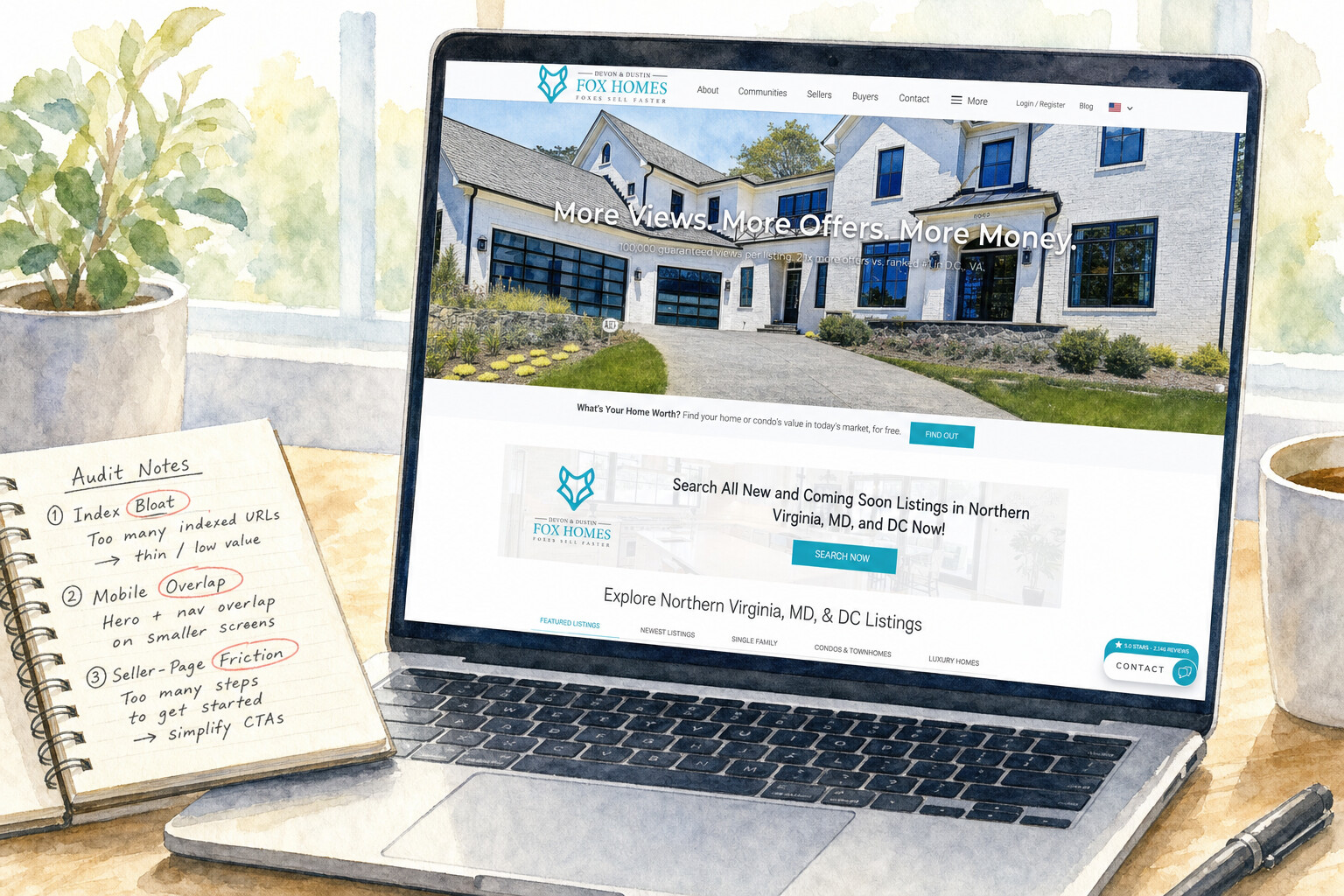
- In an internal Fox Homes case study, an approved Codex workspace helped surface more than 8,000 low-value or duplicate URLs, excessive seller-page copy, and overlapping mobile controls.
- Safe production work depends on scoped permissions, approval gates, logs, quality assurance, and a person who remains accountable for the outcome.
The important GPT-5.6 story is not that a monthly payment turns on a magical employee. It does not. The practical story is that a capable preview model, operating inside an approved workspace, can take on a defined sequence of research, file, browser, and verification tasks. That is much closer to an operations role than a normal chat session, but it still needs management.
As of July 10, 2026, GPT-5.6 is in limited preview. OpenAI says access is restricted to selected API organizations and Codex workspaces. It is not broadly available in ChatGPT, and OpenAI has not announced a general-availability date. A paid ChatGPT plan by itself does not provide preview eligibility.
That distinction matters because the headline number can be misleading. Dustin Fox currently pays $200 per month for his own subscription. That figure describes his present software expense. It is not the price of GPT-5.6 access, it does not promise eligibility, and it should not be used to tell another operator what their access will be.
The better question is not, "What subscription buys the model?" The better question is, "If an approved workspace has access, what work should the operator be allowed to perform, what must it never do, and what evidence should it return?"
GPT-5.6 Preview Access: What Is Actually Available
OpenAI describes GPT-5.6 as a three-tier model family in limited preview. The flagship tier adds a max reasoning mode and an ultra multi-agent orchestration mode. Official API pricing for the flagship is listed at $5 per million input tokens and $30 per million output tokens, while the balanced and fast tiers have lower rates. Those are usage prices, not a promise that every account can activate the preview.
The company also reports a new Terminal-Bench 2.1 result, stronger cyber capabilities and safeguards, and support for deeper agentic work. Those points come from OpenAI's own product materials. They are useful indicators, but they do not make the model infallible or automatically suitable for every business process.
An operator can be impressive in a benchmark and still fail a real task because the source data is stale, a page changed, a permission was too broad, or the success criteria were vague. Business value appears only when model capability is joined to a reliable operating design.
That operating design begins with access. A selected Codex workspace can provide a controlled place for the model to inspect a repository, read instructions, modify approved files, run commands, and verify output. An API organization can build its own tool layer and policies. Neither arrangement should be confused with opening a standard chat and expecting it to manage a company without boundaries.
For readers comparing tools, the AgentAIBrief AI tools library provides a broader view of where different products fit. The deciding factor for operator work is rarely a single writing sample. It is whether the tool can work with state, follow permissions, use the right source, stop at a gate, and provide proof.
From Helpful Chatbot to Bounded AI Operator
A chatbot answers a request. An operator works through a process. The difference sounds small until the process contains fifteen steps, three systems, several failure modes, and a public result that must be checked.
Imagine asking for an article. A chatbot can draft paragraphs. A bounded operator can inspect the editorial requirements, read a fact brief, locate approved images, check dimensions, add the article to the correct data structure, render structured data, run a forbidden-term scan, lint the project, build the site, and report exactly what changed. The writing is only one part of the job.
That wider loop is where agentic systems become useful. They can carry context between steps and use tools instead of merely describing how a person could use them. Yet the operator should never receive a vague instruction such as "handle marketing." A safe assignment names the input, destination, allowed tools, forbidden actions, review points, completion tests, and owner.
A useful job packet might say: inspect these three files, update only this project, use only the approved images, do not publish, do not contact anyone, do not open live listing records, run these two tests, and return the file list. Every clause reduces ambiguity. The operator has room to execute inside the lane without inventing authority outside it.
This is why prompt quality alone is not enough. The operating environment matters. A polished prompt attached to unrestricted credentials can create risk. A plain instruction attached to narrow permissions, observable tools, and reliable tests can produce excellent work.

Fox Homes Internal Audit: A Real Case Study
The Fox Homes example is an internal case study, not a universal performance claim. In an approved Codex workspace, the operator was allowed to examine technical and content surfaces associated with the team's own web operations. It was not given permission to publish freely, message people, or touch live property listings.
The audit surfaced more than 8,000 low-value or duplicate URLs, seller pages carrying excessive copy, and mobile layouts with overlapping controls. Each finding represented a different kind of operational drag.
The URL issue was an inventory problem. Large sites accumulate search pages, stale variants, repeated routes, and low-value combinations faster than a person can review them one by one. An operator can enumerate patterns, group similar paths, count likely duplicates, and produce a queue for human review. It should not make a sweeping deletion decision on its own because some strange-looking URLs may still have traffic, links, or business value.
The seller-page issue was an editorial and conversion problem. More copy is not always better. When important information is buried under repetition, visitors may miss the primary answer and the call to action. The operator could measure page length, compare repeated sections, flag weak hierarchy, and propose a tighter structure. A person still decides which claims, credentials, and offers belong on the final page.
The overlapping mobile controls were a user-interface problem. Desktop output can look correct while a sticky control covers another control on a narrow screen. An operator can render target widths, inspect screenshots, and identify collisions. The valuable part is not merely saying "mobile needs work." It is returning the viewport, element, screenshot, and repeatable condition that proves the defect.
These findings show the advantage of combining breadth with evidence. A person might notice one awkward page during normal browsing. An operator can systematically inspect thousands of routes and then narrow the result into a reviewable set. That does not eliminate human judgment. It gives human judgment a better map.
For another example of turning repeated work into inspected systems, read Nine AI Systems Running a Real Estate Business. The common principle is that useful automation has a defined input, a decision rule, an output, and a verification step.

Permissions Are the First Control Layer
Permissions answer a direct question: what can this operator actually reach or change? A production operator should receive the minimum access required for the assignment.
Read access and write access should be separate decisions. Reading a project to diagnose a broken component is lower risk than changing every file. Editing a draft is lower risk than deploying it. Preparing an email is different from sending it. Inspecting a public page is different from opening private customer records. A good setup expresses those differences in tools and credentials, not only in prose.
Scope should also name prohibited areas. For a real estate team, live listing systems, private client records, financial controls, and outbound communication deserve strong boundaries. If a task does not require them, they should not be available. If a later task genuinely requires a sensitive action, it should receive a separate authorization with a narrow target and a clear review point.
The same rule applies to file systems. Give the operator the project directory it needs, not the entire machine. The same rule applies to browser sessions. Give it the site needed for inspection, not every authenticated service. The same rule applies to API keys. Use the least capable key that can complete the approved job.
Permissions should be tested, too. A policy that says "do not deploy" is valuable, but a workspace that lacks deployment credentials is stronger. A task that says "do not send messages" is valuable, but an operator without a messaging connector is safer. Good design makes the safe path the easy path.
Approval Gates Keep Consequences Human
An approval gate is a point where the operator must stop and a person must decide whether the next action is authorized. Gates belong before consequential, public, costly, destructive, or difficult-to-reverse actions.
Drafting an article can be autonomous. Publishing it should require review. Building a proposed redirect map can be autonomous. Applying redirects across a live site should require approval. Preparing a campaign can be autonomous. Activating spend should require approval. Writing a response can be autonomous. Sending it to a client should require explicit permission.
The gate should present enough evidence for a real decision. "Ready to publish?" is weak. A stronger handoff includes the preview URL, word count, source list, image checklist, metadata lengths, lint result, build result, known caveats, and exact files changed. The reviewer can then decide based on facts instead of trusting a vague success message.
Gates also prevent authority from drifting across a long task. An operator may be authorized to research, draft, and test, but that does not imply permission to deploy. Each phase keeps its own boundary. This matters because agentic work often feels continuous to the system even when the business treats one step as much more consequential than the last.
If your team is still learning how to write bounded assignments, the AgentAIBrief prompt library can provide starting structures. Add explicit permissions and stop conditions to every reusable prompt that touches production systems.
Logs Turn Activity Into an Audit Trail
Logs answer four questions: what did the operator receive, what did it do, what happened, and what remains uncertain? Without those records, a team cannot reliably review a result or learn from a failure.
A useful task log records source files, commands, tool calls, changed paths, validation output, timestamps, and blockers. For web work, it may also record tested URLs, status codes, viewport sizes, screenshot paths, and visible defects. For content work, it may record source notes, claim corrections, image provenance, link checks, and schema validation.
Logs should be concise enough to inspect. A mountain of raw terminal output is not automatically useful. The operator should preserve detailed evidence where needed, then produce a short completion summary that points to it. That gives the reviewer both a fast answer and a deeper trail.
The audit trail is especially valuable when an error appears later. If a page breaks after a change, the team can identify what was edited and which build passed at the time. If a fact becomes outdated, the source note shows why the original wording was chosen. If a forbidden action was attempted, the log exposes the request and the block.
Logging also improves future assignments. Repeated failures can become new validation rules. Repeated manual checks can become scripts. Stable fixes can become conventions. The operator gets more dependable because the system around it remembers what worked.
Quality Assurance Must Test the Result
Quality assurance is not the operator rereading its own confident summary. It is a separate set of checks against the requested outcome.
For code, that can include linting, type checks, unit tests, and a production build. For an article, it can include metadata lengths, word count, image count, alt text, heading count, internal link count, forbidden-copy scans, duplicate-paragraph detection, and structured-data parity. For a public page, it can include desktop and mobile rendering, image dimensions, animation visibility, link destinations, and console errors.
The strongest checks are deterministic. "Looks good" is a weak test. "The title contains 39 characters, the description contains 155, six image tokens are present, five FAQ entries match the schema, and the build exits zero" is reviewable evidence.
Visual review still matters because automated tests cannot catch every design failure. A technically loaded image may be irrelevant. A responsive iframe may preserve 16:9 and still make its text unreadable on a phone. A layout may pass a DOM inspection while an orange sweep covers the headline at the wrong moment. Human visual QA catches the gap between valid markup and a useful experience.
QA should happen before a consequential gate and again after any public change. A local build proves the project can compile. It does not prove a deployed asset reached the content network or that a cached page updated. The operator should distinguish pre-deployment verification from live verification and never claim one proves the other.
The AgentAIBrief video library shows why output-specific review matters. Motion work needs timing and responsive checks that a text-only validator cannot provide. Every medium has its own proof requirements.
Human Accountability Does Not Disappear
An AI operator can carry out work, but people remain accountable for the business decision. That is not ceremonial oversight. It means a named person owns the permissions, approval, review, correction, and final result.
The human owner decides whether the source is appropriate, whether a recommendation fits company policy, whether a claim is fair, whether a customer impact is acceptable, and whether the final work should go live. The operator can surface evidence and inconsistencies. It cannot transfer legal, ethical, or professional responsibility away from the organization using it.
This is also why the tool should augment staff instead of being framed as a replacement for them. The system is strongest at breadth, repetition, state tracking, and deterministic checks. People remain stronger at accountability, context, sensitive judgment, negotiation, relationship management, and deciding when the process itself is wrong.
The best division of labor gives repetitive inspection to the machine and reserves consequential judgment for people. An assistant can inventory thousands of URLs while an experienced operator decides which patterns matter. It can prepare five layout options while a brand owner chooses the right one. It can flag a discrepancy while a responsible person determines the correction.
When the operator is wrong, the right response is not to hide the error or blame the model. Record what happened, correct the output, narrow the permission if needed, improve the test, and keep the human owner visible.
A Practical AI Operator Checklist
Use this checklist before giving any agentic model a real business assignment:
- Name one outcome. Describe the completed artifact or verified state, not a broad aspiration.
- Identify the source of truth. Point to the files, official pages, databases, or approved briefs that control factual decisions.
- Limit permissions. Allow only the directories, tools, accounts, and actions required for this task.
- List prohibited actions. State whether publishing, deployment, spending, deletion, messaging, customer-data access, or live listing access is forbidden.
- Define approval gates. Name the exact step where the operator must stop for a person.
- Require an evidence trail. Ask for changed files, sources, commands, screenshots, checks, and unresolved uncertainty.
- Write completion tests. Include measurable counts, valid formats, expected statuses, and required outputs.
- Add content safeguards. Include Fair Housing review, privacy rules, brand constraints, and restricted public terms where relevant.
- Run technical QA. Use the smallest meaningful checks first, then the production build or equivalent before handoff.
- Run human QA. Review the actual experience at target screen sizes and inspect any claim with meaningful business impact.
- Keep a rollback path. Know how to restore the prior state before authorizing a public or destructive action.
- Assign an owner. Put one person in charge of approval, correction, and the final outcome.
This checklist is deliberately operational. It turns "use AI" into a controlled work order. Teams can adapt it to research, content, SEO, analytics, development, recruiting, or internal administration without pretending every category has the same risk.
What the $200 Figure Does and Does Not Mean
Dustin's current subscription costs $200 per month. That is a real expense in this case study, but it needs careful framing.
It does not mean GPT-5.6 costs $200. It does not mean the subscription includes the preview. It does not mean another customer paying the same amount will receive access. It does not replace API usage pricing. It does not predict the final commercial packaging when the preview ends.
The figure is useful only as part of Dustin's own operating context. He uses paid AI tools and an approved Codex workspace in production workflows. The value judgment depends on time saved, work completed, risk controlled, and quality verified. Another team may have different tools, access, usage, and economics.
Evaluate operator cost at the workflow level. Count the subscription expense, API usage, supporting tools, setup time, human review, error correction, and maintenance. Compare that full cost with the measurable work completed. A cheaper tool that stops at advice may create more human labor than a costlier tool that completes a verified draft. A powerful operator with weak controls may create expensive mistakes.
The honest conclusion is narrower and more useful: Dustin's current $200 subscription is one line item in his AI stack. Preview access is separately controlled by OpenAI eligibility, and usage may carry separate API costs.
Where Real Estate Teams Should Start
Start with an internal, reversible, evidence-rich process. Do not begin with autonomous public communication or live transaction decisions.
Good first assignments include content inventory, broken-link inspection, image-dimension checks, structured-data review, duplicate-route analysis, internal documentation, draft preparation, and test automation. These jobs have clear inputs and outputs, and a person can review the result before anything changes publicly.
Then add controlled write access inside a development environment. Let the operator update a draft, patch a component, or create a validation script. Require linting and a build. Review the diff. Only after the team trusts the workflow should it consider a separate, explicit gate for deployment.
Keep customer communication, live listing systems, contractual interpretation, financial decisions, and irreversible changes outside the early autonomy lane. Those areas deserve specialized policies and direct human control.
The goal is not maximum autonomy. The goal is dependable leverage. Each successful assignment should leave behind better instructions, better tests, and a clearer boundary for the next one.
Teams interested in the larger production pattern can read Claude vs. Codex for Real Estate Agents. The comparison is most useful when it focuses on verified completion rather than which model produces the most polished paragraph.
Source Note
Preview status, eligibility, model-family details, capability statements, and API prices were checked against OpenAI's June 26, 2026 product announcement and its official preview eligibility and plan help pages. Preview terms can change, so confirm the current official documentation before making a purchase or access decision.
The Fox Homes URL, seller-page, and mobile-control findings are internal audit observations from this case study. They describe that site and workflow. They should not be treated as guaranteed results for another company, site, model, or operator setup.
Frequently Asked Questions
Is GPT-5.6 available to every ChatGPT subscriber?
No. GPT-5.6 remains a limited preview for selected API organizations and Codex workspaces. Paying for a ChatGPT plan by itself does not grant preview access.
Does a $200 monthly ChatGPT subscription guarantee GPT-5.6 access?
No. The $200 figure in this case study is Dustin Fox's current subscription cost. It is not an access price, an eligibility promise, or a guarantee that any account can use the preview model.
What can an AI operator do for a real estate team?
With approved tools and clear boundaries, it can inspect files, research public sources, draft content, organize data, run technical checks, and prepare work for human review. External actions should remain behind explicit approval gates.
What did the Fox Homes internal audit find?
The internal case study identified more than 8,000 low-value or duplicate URLs, excessive copy on seller pages, and overlapping controls on mobile layouts. These are team-specific audit findings, not universal claims about the model.
Who is accountable when an AI operator makes a mistake?
People remain accountable. The team decides permissions, approves consequential actions, reviews logs, verifies outputs, corrects errors, and owns the final business result.
Build a Safer Operator Workflow
Do not buy software based on a viral access claim. Confirm eligibility, choose one bounded process, limit the tools, put public actions behind approval, and require proof. That is how a preview model becomes useful without becoming an uncontrolled risk.
For daily operating ideas and grounded AI updates, subscribe to AgentAIBrief. Use the checklist above on the next repeated task your team wants to improve, and keep a person accountable at every consequential gate.